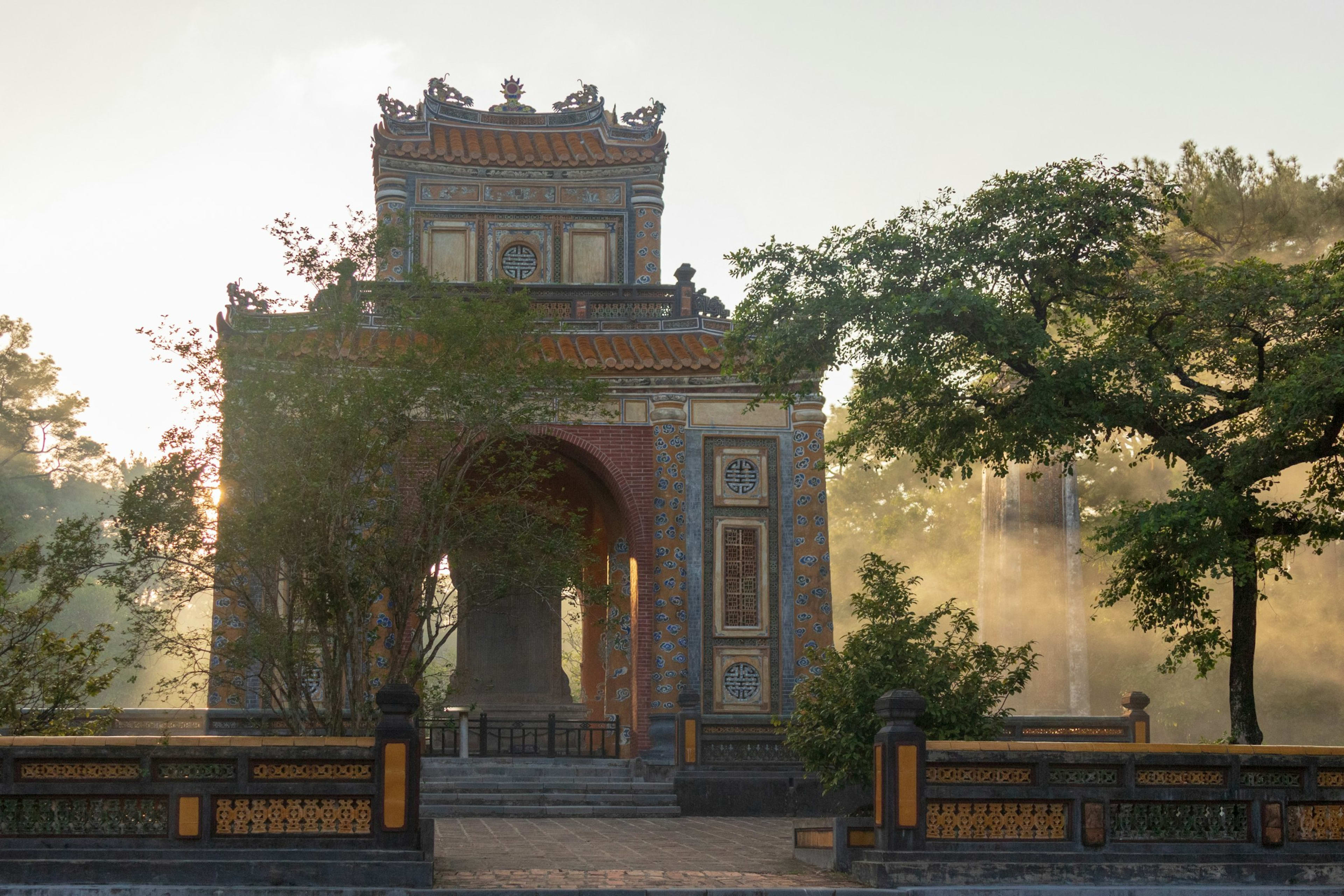
Reading a Huế royal tomb
A Nguyễn tomb is a garden first and a grave second. Once you know the order to walk it in, the whole design opens up.
A garden before it is a grave
Emperor Tự Đức built his tomb twenty years before he needed it, and spent long stretches of his reign living there rather than in the Imperial City. The lake, the pavilions, and the pine-covered hills came first. The burial mound, tucked off to one side and easy to miss, came almost as an afterthought.
That order matters. Walk the site expecting a cemetery and you will wonder where the point is. Walk it expecting a retreat built by a poet-emperor, and the pavilions over Lưu Khiêm lake make immediate sense.
The lake and the poetry pavilion
Xung Khiêm pavilion sits over the water on stilts, built for an emperor who wrote thousands of poems and wanted somewhere quiet to do it. Sit there for a few minutes before moving on — most visitors walk straight through toward the tomb itself and miss why the pavilion was placed exactly there, facing the widest part of the lake.
Khải Định — concrete, mosaic, and a different century
A short drive away, Khải Định built his tomb in the 1920s using imported cement and steel, then covered nearly every surface inside with mosaic made from broken glass and porcelain. It looks nothing like Tự Đức, and it is not supposed to — Khải Định wanted a tomb that showed he had seen Europe.
The mosaic ceiling of the burial chamber took an artisan named Phan Văn Tánh over a decade. Look up before you look at the bronze statue of the emperor below it.
How to actually walk a Nguyễn tomb
- Start at the honour courtyard — the stone mandarins and elephants lined up facing the entrance
- Read the stele house next, usually the tallest single structure, recording the emperor's own account of his reign
- Save the burial mound or chamber for last — it is deliberately the smallest, quietest part of the site
Getting there without the midday heat
Both tombs sit south of the city along the Perfume River. A boat leaving Huế around 7am reaches Tự Đức before the tour groups and before the heat turns the courtyards into a furnace. Cyclos work too, but plan for the hills — Khải Định is built up a slope, and no cyclo driver enjoys pedalling it in August.
More from the journal
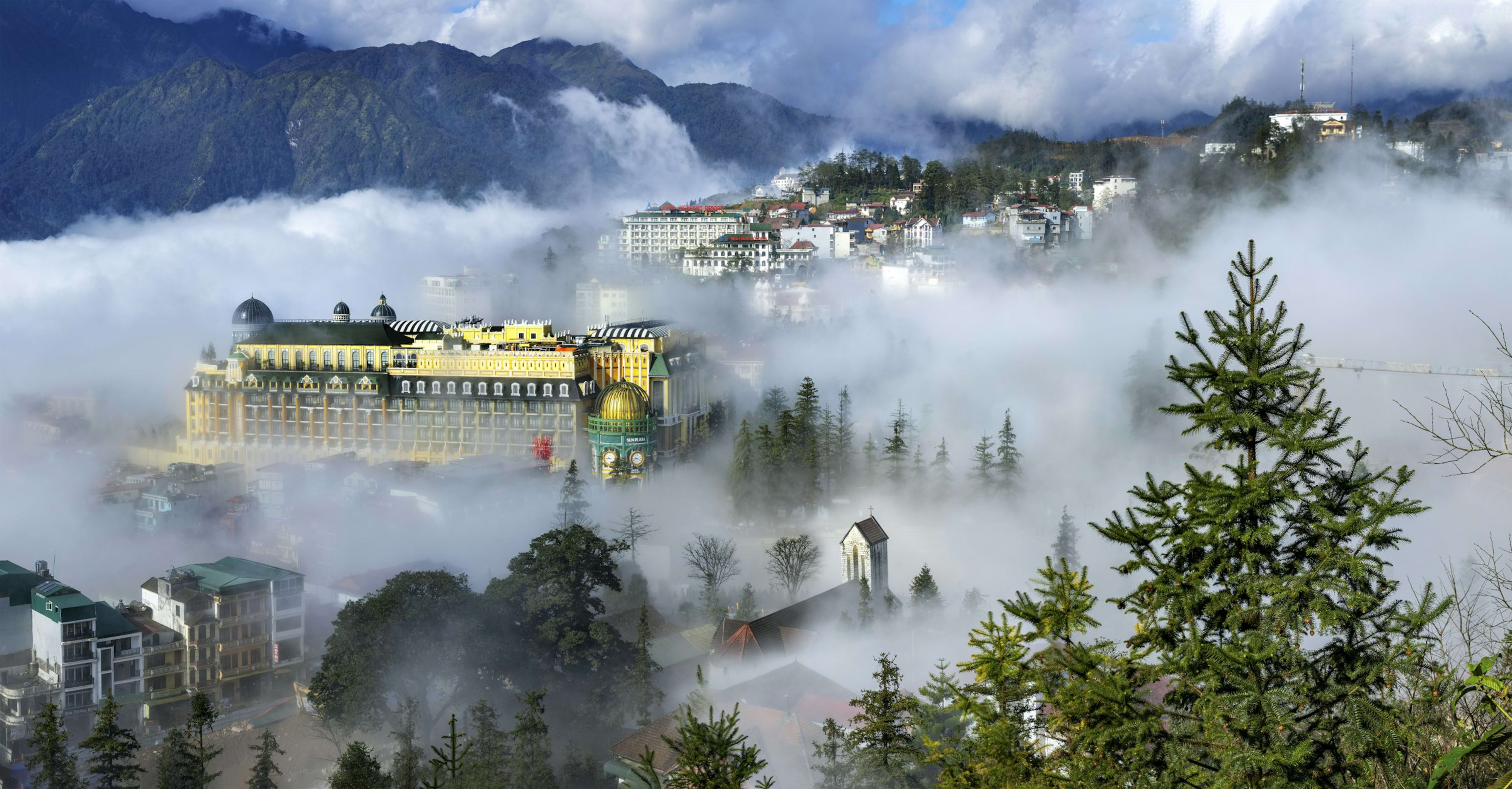
What to pack for the mist season
A light jacket, real shoes, and patience. The terraces reward all three — our guides share their honest checklist.
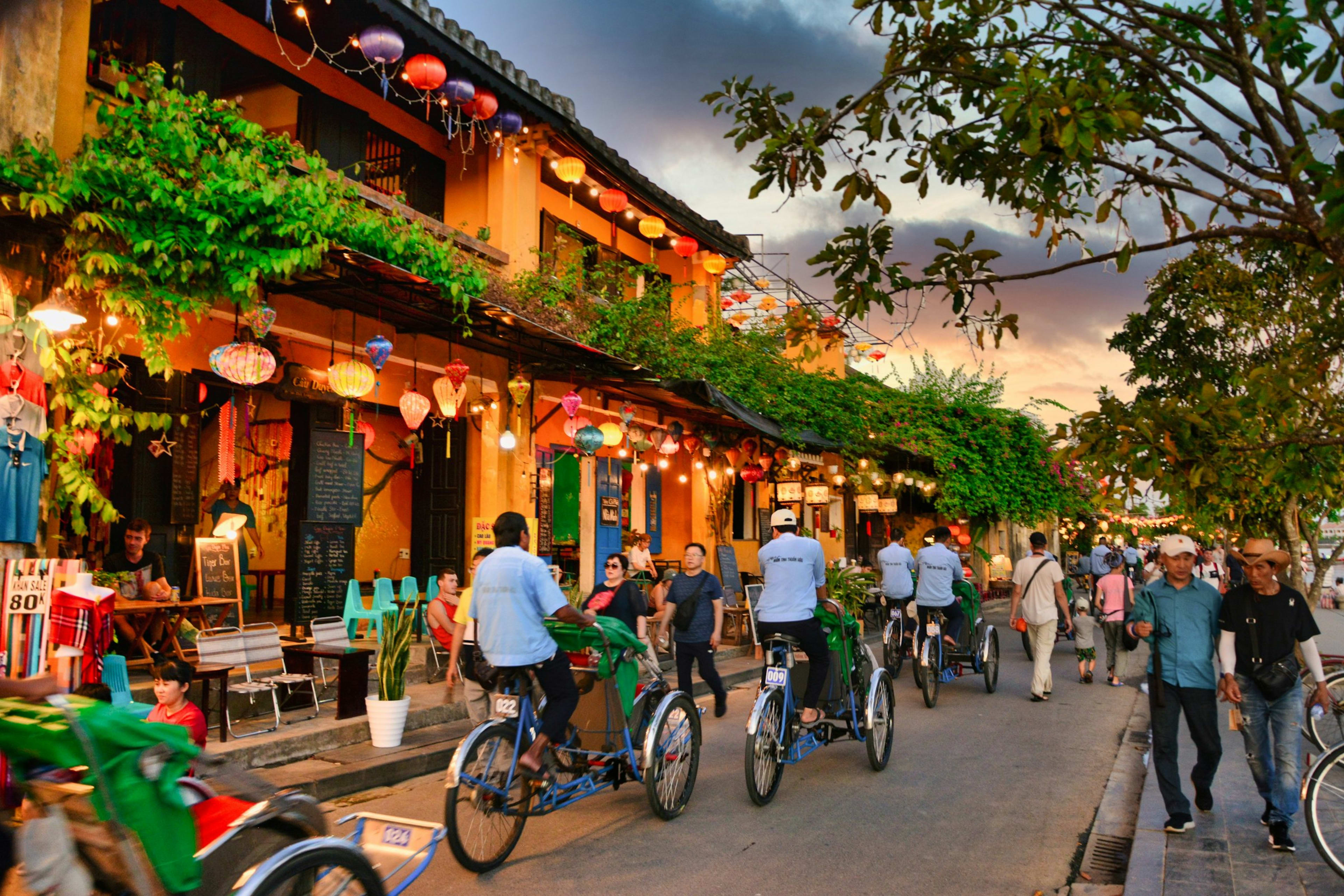
Eating your way through Hoi An
Cao lầu at a market stall, bánh mì by the river, and the one dessert locals queue for after dark.

Floating markets before sunrise
Why the Mekong wakes up at 4am, and how to see Cái Răng the way traders do — from the water, with coffee.