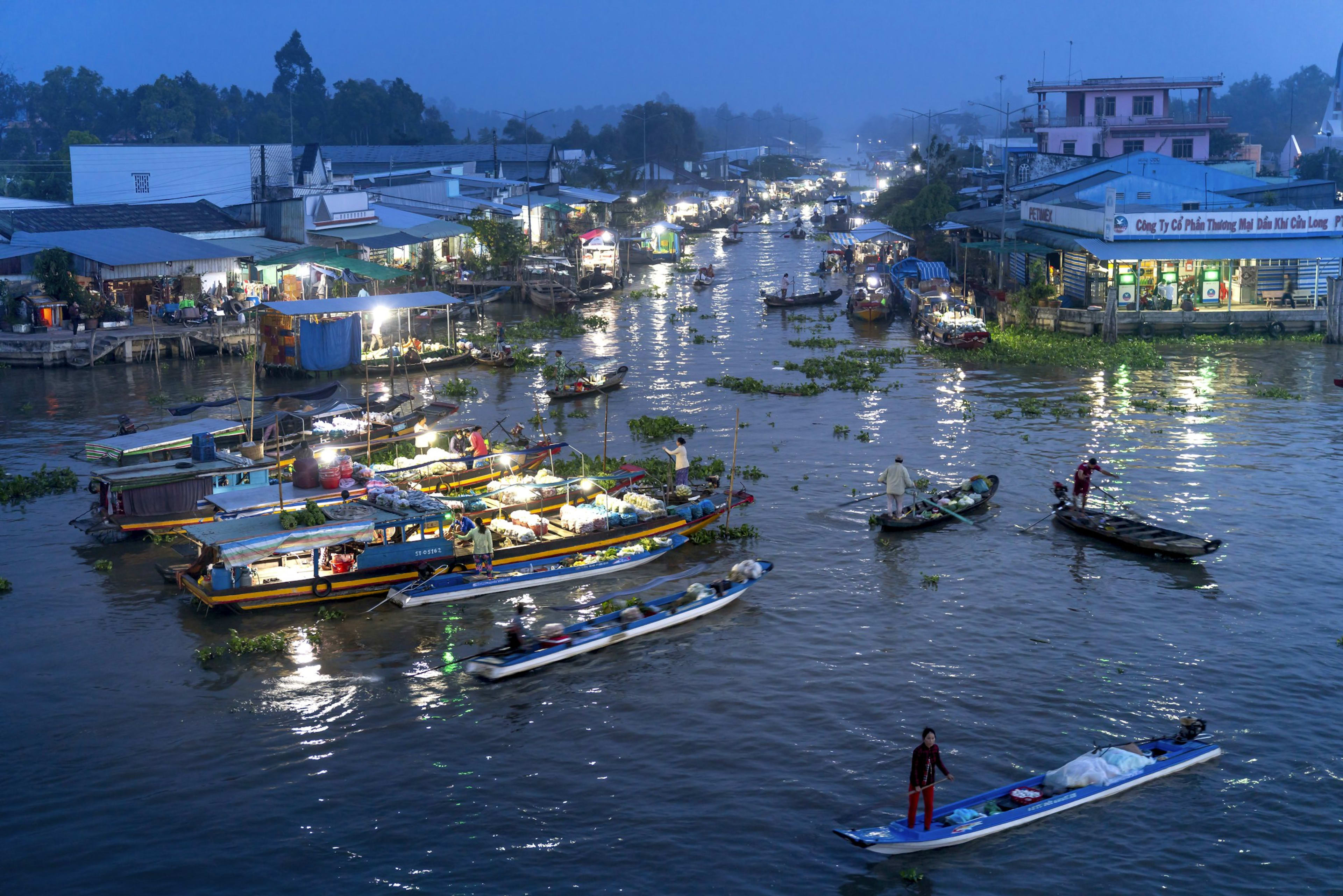
Floating markets before sunrise
Why the Mekong wakes up at 4am, and how to see Cái Răng the way traders do — from the water, with coffee.
Why 4am, not 8am
Wholesale trading at Cái Răng peaks between 5am and 6:30am, when the big boats sell sacks of pineapple and dragon fruit to smaller buyers who then move on to town markets. Arrive after 7am and you mostly see empty hulls and tourists.
Leaving the dock at 4:30am feels absurd the night before and completely obvious once you are on the water and the sky starts to turn.
Getting on the water
Boats leave from Ninh Kieu wharf. Agree the price before you step in, not after — a small boat for two people should run under 400,000 VND for a two-hour loop, more if you add the narrower canals toward Phong Dien.
Wear something you do not mind getting a little wet. Spray comes over the bow whenever a larger cargo boat passes close.
Reading the poles
Each boat hangs a bamboo pole, called a cây bẹo, with a sample of whatever it is selling tied to the top — a pineapple, a bunch of bananas, a coconut. Traders never shout their goods here; the pole does the advertising, and buyers scan the skyline of poles the way you might scan shop signs on a street.
A pole with nothing tied to it, or with a leafy branch instead of produce, means the boat itself is for sale.
Coffee on the boat
A rowing coffee vendor works the market every morning, calling out to the trading boats. Order a cà phê sữa đá and drink it right there, ice rattling against the glass, while the sun clears the tree line on the far bank.
More from the journal

What to pack for the mist season
A light jacket, real shoes, and patience. The terraces reward all three — our guides share their honest checklist.
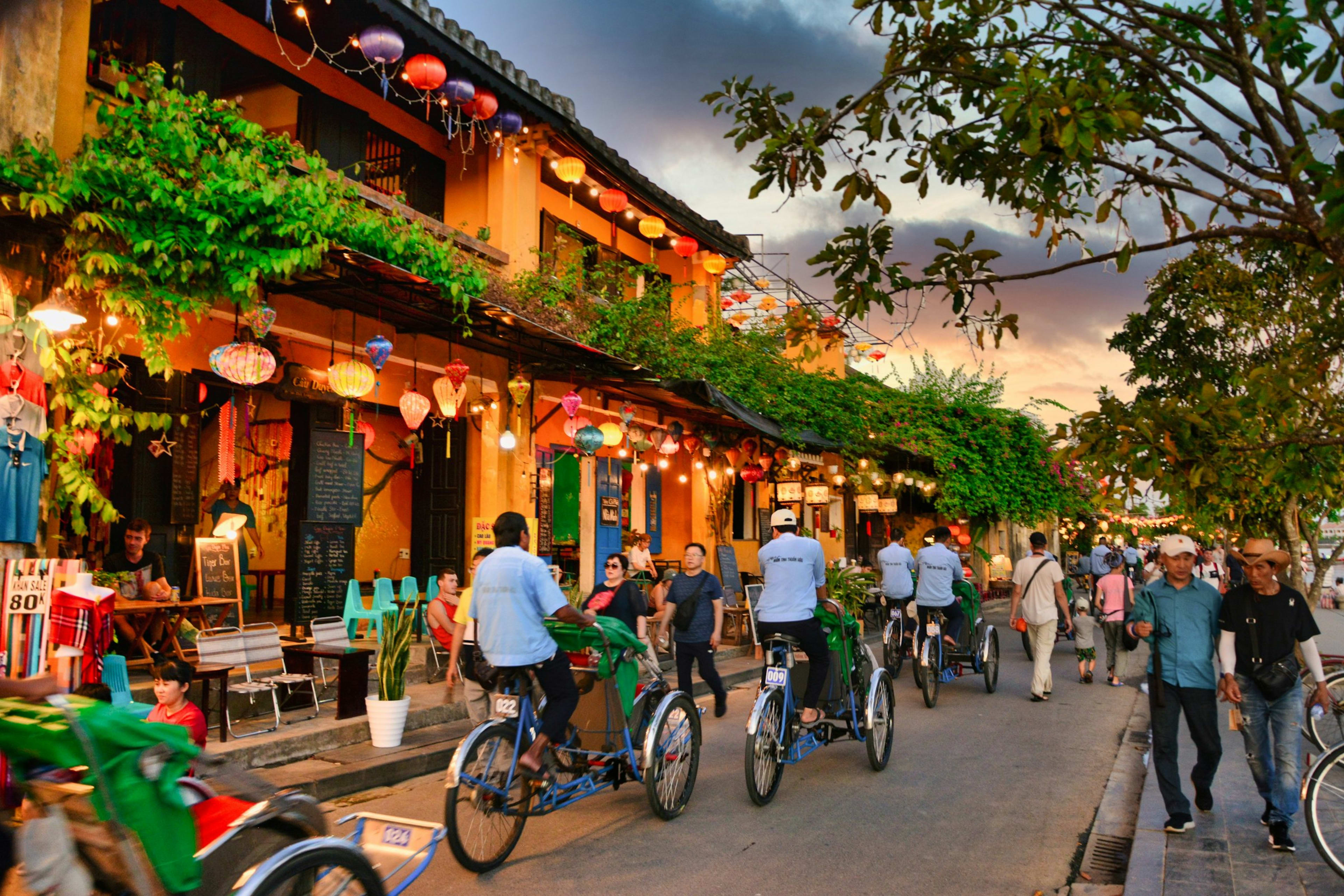
Eating your way through Hoi An
Cao lầu at a market stall, bánh mì by the river, and the one dessert locals queue for after dark.

When to come, and when not to
Vietnam runs three different climates at once. The month that is perfect in the north can be the worst possible week in the centre.